
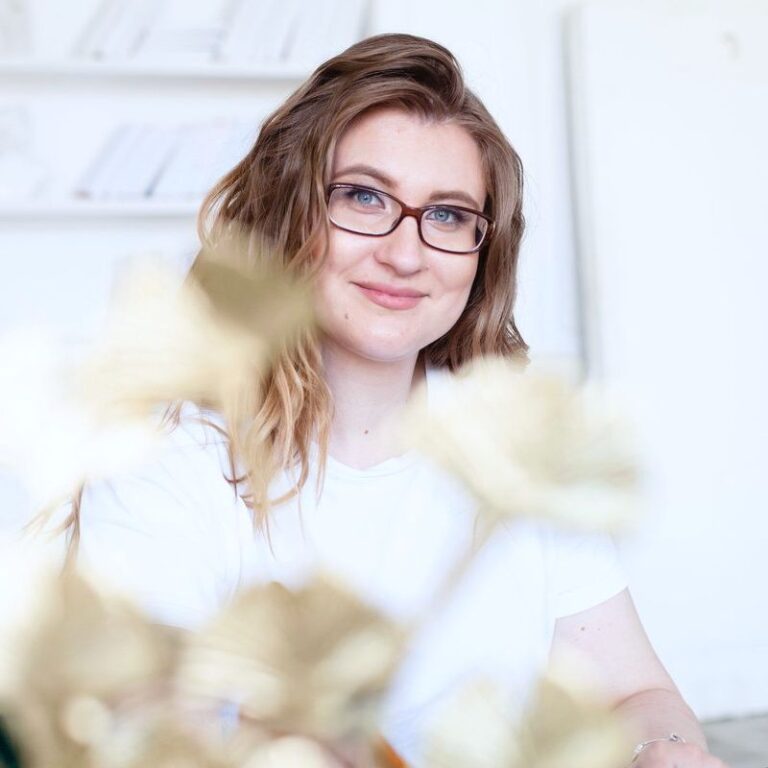
Author: Ekaterina Zaznova
Independent artist, founder of the educational platform Pro Akvarel
Member of the American Watercolor Society (AWS), National Watercolor Society (NWS), Transparent Watercolor Society of America (TWSA), International Watercolor Society (IWS), Union of Russian Watercolorists, and the Eurasian Art Union
https://www.instagram.com/zaznova_ekaterina/
Abstract
This article outlines the structure of an original watercolor course as a unique pedagogical product, developed in response to a growing demand for creative and research-based approaches to visual education. Special focus is given to the innovative components of the methodology: experimentation, content plasticity, integration of psycho-emotional practices, and engagement of participants as co-authors. A structural scheme of the course is presented, along with a comparative analysis against traditional models of art education.
1. Introduction
In an era of content overload and mass-market painting courses, it has become clear: to create a truly valuable educational product, one needs not only a high level of artistic skill but also pedagogical boldness. My course is the result of five years of observation, teaching, international marathons, and tens of thousands of interactions with artists from around the world. Its mission is not to teach “how to paint by the rules” but to open up vision, thinking, and personal visual language.
2. Goals and Principles
When developing the program, I relied on three fundamental goals:
● To dismantle the template of “step-by-step copying” and replace it with visual exploration
● To make each module a metaphor for internal processes: transformation, resilience, self-connection
● To give artists tools they can keep for life—regardless of genre or technique
3. How My Method Differs from Traditional Models
| Parameter | Traditional Course | Zaznova’s Course |
|---|---|---|
| Structure | Linear, by technique | Hybrid: by states and themes |
| Materials | Paper, brushes, water | Includes alcohol (various concentrations), salt, splatters, wipes |
| Interaction | Teacher → student | Curator ↔ artist ↔ community |
| Goal | Learning technique | Developing artistic thinking |
| Reflection | None | Visual journals and check-in sessions |
| Accessibility | Limited access | Global online platform |
4. Course Model: From Sensory Perception to Independent Visual Expression
My original watercolor approach developed through long-term, phased interaction with material, imagery, and educational practice. Below are seven key stages in the formation of my own visual language, reflecting both internal transformation and the evolution of methodological principles.
-
Academic Foundation
The initial stage was grounded in classical art education, including drawing, painting, composition, and tonal work. This base provided technical stability and visual thinking skills necessary for further experimental steps. Despite parallel training in economics, the systematic practice of classical painting formed the core of my artistic identity. -
Emotional Catalyst
A major shift occurred during personal transformation, including leaving a career in international consulting and processing traumatic experience. This emotional crisis was both a psychological turning point and the beginning of a deep visual search. Drawing became existentially significant, no longer optional. -
Mastering Classical Watercolor
Transitioning from mixed media to pure watercolor, I focused on classical principles: transparency, layering, and atmospheric light. Attention to traditional subjects and form-building through color helped deepen technical control. -
Experimental Methods
The next stage involved active material experimentation: salt, alcohol, textures, dry brushes, and wipes. These elements became the foundation of my signature method, later formalized and protected by patent. -
Thematic Symbolism and Image Metaphor
At this stage, watercolor became a tool for meaning-making rather than visual recording. I developed series where flowers became psychological markers, and landscapes or architectural textures symbolized internal states. The conceptual density of the works increased, and visual elements took on symbolic functions. -
Global Communication and Institutional Recognition
This period saw the establishment of international platforms (Pro Akvarel, About Watercolour), participation in leading watercolor institutions and global art fairs (including Affordable Art Fair NYC), curatorial roles, brand collaborations, and deep integration into the global art community. -
Innovation and Pedagogical Transmission
Currently, I focus on building an educational system where experimentation is combined with scholarly reflection. My course is framed as artistic research: participants don’t just learn techniques—they build their own visual statements. This situates my practice within the paradigm of art pedagogy and visual methodology.
Chart 1. Step-by-Step Model of Visual Language Formation
Each module includes practical exercises focused not only on technique but also on cognitive strategy:
— How to express anxiety through breaking form
— How to show resilience via texture
— How to emphasize a subject using negative space
5. Unique Components
● “Alcohol and Watercolor” Module
A patented methodology component. Allows working with fluid forms, ruptures, and controlled chaos. The artist becomes a mediator between material and emotion.
● Communicative Grid
Each task includes reflective questions:
— “What did you want to say?”
— “What are you avoiding in color?”
— “Which theme resists you—and why?”
● Psycho-Emotional Blocks
A format of art interviews with oneself. Texts, letters, visual “intentions” create an emotional anchor to the process.
6. Conclusion
This author course becomes not just an educational format, but a research field where the artist studies not only technique but also the self. It is built not on a vertical model of knowledge but as a personalized journey. This is the innovation—not only in watercolor but in rethinking what art education is truly for.
References
-
Finley, M. (2021). Reimagining Watermedia: Experimental Techniques and Contemporary Practice. Watermedia Press.
-
Zhang, L. (2020). “Creative Pedagogy in Fine Art Education: Visual Thinking and Emotional Intelligence.” Journal of Arts Education, 15(2), 45–58.
-
Mitchell, S. (2019). The Intuitive Eye: Teaching Art through Personal Symbolism and Material Exploration. New York: ArtEd Books.
-
Kim, J. (2017). “Alcohol-Based Techniques in Modern Watercolor.” International Journal of Visual Arts Research, 9(1), 33–48.
dated November 11, 2023

- The Poem Hidden Inside Someone Else’s Page - July 20, 2026
- After 14 Years, We’re Finally Getting a James Bond Game - June 17, 2026
- Serhiy Tokarev on TechNovator’s Victory in Deep Tech Accelerator - June 9, 2026